
Elder - A medicine for transition
Spotlight on a Plant Ally
Sambucus spp.
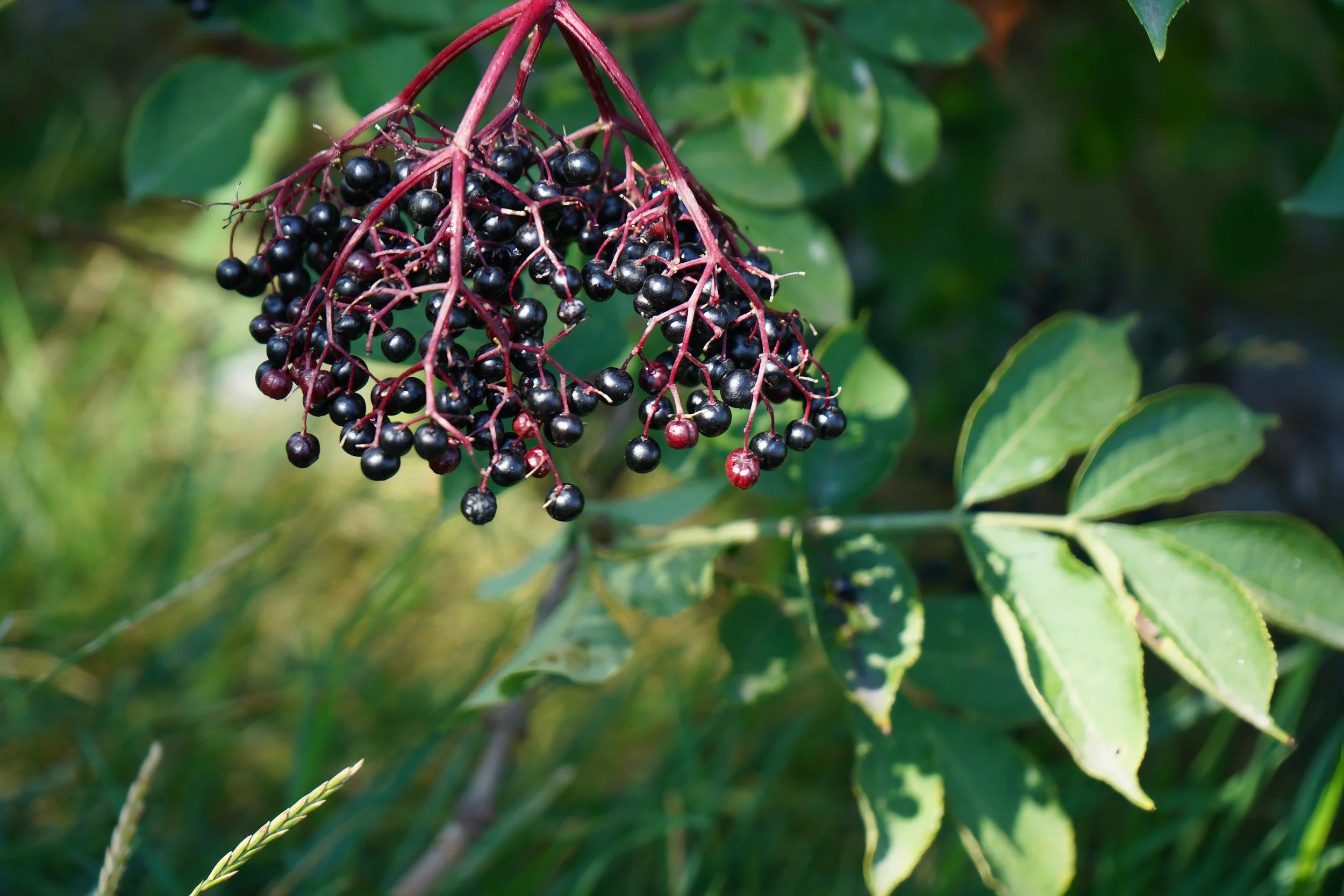
Elder is a must have in any medicine cabinet and it offers nearly a full medicine cabinet through it's berries, flowers, and leaves!
Its berries work to remove viruses from the body and move congestion out of the lungs, kidneys, and joints. The flower promotes sweating, helping the body release excess heat. One of my favorite fever remedies is elderflower and yarrow in a hot tea. The leaf cools tissues inside and out and makes a healing wound salve and an excellent wash to treat acne and tone the skin.
Elder grows well in Lyons and I've heard from several people at the shop who grow it in their gardens. One of my favorite ways to prepare elderberry is in a glycerite, which we have available in the shop. During our class on the 18th, Sarah will lead us through making a syrup, which you can take home to share with your family as we transition into winter and cold and flu season. Just a quick note, the raw nuts of an elderberry are toxic, so don't eat the raw berries whole!
In many European cultures, the Elder is associated with spirits or goddesses. In Celtic and pagan traditions, the elder represents the "Crone" aspect of the Triple Goddess, symbolizing the end of a cycle, transformation, and the transition into winter. In Danish and Scandinavian folklore, a dryad named Hyldemoer (or Lady Elder) is believed to reside within the trunk of the elder tree. Permission must always be respectfully requested before cutting any part of the tree; otherwise, she may bring misfortune or haunt the offender. In German and Norse traditions, the elder is associated with Frau Holle (or Holda), a powerful goddess of wisdom, winter, and the home who presides over the spirit and fairy realms.
Elder embodies the wisdom of the end of the cycle, making it the perfect plant ally for the end of the year, this darkest of times when we need it the most.
