
Burdock: Tasty Tonic Aid
Spotlight on a Plant Ally
Arctium lappa
Burdock, Arctium lappa, is also called lappa, clotbur, thorny burr, cockle buttons, and beggar’s buttons. Grace, our shop dog, is very good at collecting cockle buttons in her long border collie butt hair, but we prefer to gather fresh young roots in the fall and early spring.
Benefits
Burdock is an excellent tonic herb and one of the most frequently used herbs for liver complaints. It is rich in magnesium, silicon, iron, manganese, and thiamine, as well as a host of other vitamins and minerals.
It is great for the skin and you can use it internally or externally for acne, oily skin, psoriasis, and other skin-related imbalances. Try our Inner/Outer Gut and Skin Tincture (more info below)! It promotes healthy kidney function and expels uric acid from the body, so it’s often used to relieve gout and rheumatism.
Suggested Uses
Use fresh young burdock in soups and stir-fries. It makes a tasty tea and helps balance the flavor for more bitter liver herbs in tea blends and tinctures. Serve the tea with dinner as a digestive aid.
Use burdock leaves and seeds in salves, as a poultice, or as a wash for itchy, irritated skin.
Foraging and Ecology
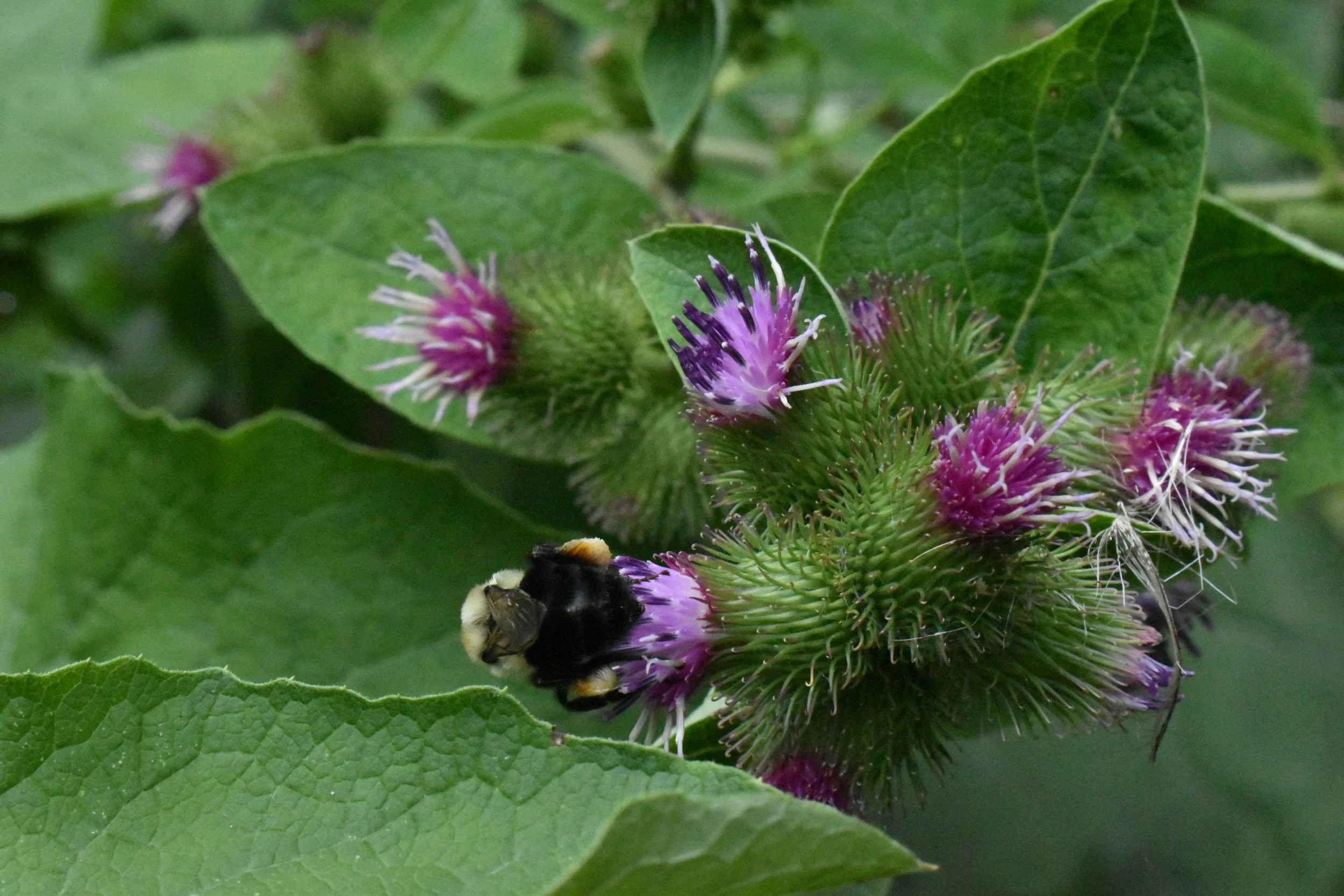
Burdock has short, stocky branches with large coarse, heart-shaped leaves that grow alternately. Round purple flowers are surrounded by spikey bracts. Burdock grows in disturbed areas and woods. It’s a Class C noxious weed in Colorado, so help yourself to this one when you find it (of course being conscious of areas where herbicides might have been used).
Folklore and Mythology
The botanical name Arctium lappa contains a mythic history: Arctium comes from the Greek arktos, meaning "bear," referring to the rough, hairy texture of the burrs. Lappa comes from a Celtic word meaning "hand." Legend says the plant was created with "tiny hands" specifically so it could grab onto the passing world, symbolizing a soul that refuses to be forgotten or left behind.
In South Queensferry, Scotland every August, a local man is covered from head to toe in thousands of burdock burrs (the "Burryman"). He parades through the town, barely able to move his arms, receiving sips of whiskey through a straw. It is believed that as he walks, the burrs on his costume "catch" the ill will and bad luck of the community, carrying it away to ensure a fruitful harvest.
In English and American folklore, burdock burrs were often called "Billy Buttons" or "Love Leaves." Children and young adults would throw a burr at the back of someone they fancied. If the burr stuck to the person’s clothing, it was a "sign" that their love was reciprocated. If it fell off, the affection was said to be fleeting.
Next time you’re in a disturbed area, keep an eye out for those persistent burrs and if you happen to catch one (or your dog does in their butt hair), perhaps you're helping remove some ill will from the world. And now you know where to come back and harvest in the fall!
